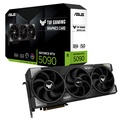
A new and alarming report has surfaced, casting a shadow over the high-performance graphics card market. Despite efforts to improve power delivery safety, a user's NVIDIA GeForce RTX 5090 experienced a catastrophic failure where its 16-pin power connector not only melted but reportedly caught fire, resulting in severe damage. This incident, occurring on Christmas Eve in the United States, has reignited discussions about the inherent risks associated with the high-wattage connectors used in modern flagship GPUs, questioning whether user error or a deeper design flaw is to blame.
Reported Incident Details:
- GPU Model: NVIDIA GeForce RTX 5090
- Failed Component: 12V-2x6 (16-pin) power connector
- Nature of Failure: Melting and reported open flame
- Time of Incident: Christmas Eve (December 24th) in the United States
- GPU Usage Prior: Approximately nine months
- Source: User report (u/nmp14fayl) on Reddit's r/pcmasterrace
A Christmas Catastrophe: Connector Burns "Beyond Recognition"
The incident was first reported by a Reddit user, u/nmp14fayl, who detailed that after nearly nine months of normal use, their system emitted a strange smell on December 24th before the power connector on their RTX 5090 visibly caught fire. The resulting damage was described as extreme, with the plastic housing of the 12V-2x6 connector melting into an unrecognizable charred mass. Photographs show exposed copper wiring, a solidified blob of solder on the GPU's connector, and even scorch marks on nearby AIO cooler tubing. The user stated it was safer not to attempt removing the fused cable from the GPU, planning instead to take the entire assembly to the retailer, Micro Center, for assessment after the holidays.
User's System Configuration (Per Report):
- Power Supply: PowerSpec 1050 GFM (ATX 3.1-compliant)
- Power Cable: Native 12V-2x6 cable supplied with the PSU (not an adapter)
- Other Components: Appeared undamaged; system posted using integrated graphics.
Investigating the Cause: Native Cable and Compliant PSU Rule Out Common Culprits
What makes this case particularly noteworthy for investigators is the equipment involved. The user clarified they were not using a problematic 8-pin-to-16-pin adapter, which has been a frequent point of failure in past incidents. Instead, they were using a native 12V-2x6 cable that came bundled with their PowerSpec 1050 GFM power supply, which is certified as ATX 3.1-compliant. This specification is the latest standard designed to handle the rigorous power demands and transient spikes of modern components like the RTX 5090. The use of compliant, first-party hardware appears to eliminate the most commonly cited causes of such failures, shifting scrutiny back onto the connector design itself.
The Persistent Problem of High-Power GPU Connectors
This event is not an isolated one but part of a persistent trend affecting high-end graphics cards. The underlying issue stems from the physics of delivering immense power—reportedly close to 600 watts for the RTX 5090—through a relatively small connector. The 12V-2x6 design was introduced as an improvement over the infamous 12VHPWR connector, which plagued many RTX 4090 cards with melting issues. The core vulnerability remains: if a single pin within the connector loses proper contact due to mechanical stress, manufacturing variance, or thermal cycling, the electrical load is redistributed to the remaining pins. This can cause localized overheating, melting the plastic, and in worst-case scenarios, igniting it.
Connector Evolution & Context:
| Connector Generation | Typical Use Case | Known Issues |
|---|---|---|
| 12VHPWR | NVIDIA RTX 40-series (e.g., RTX 4090) | Widespread reports of melting connectors, often linked to adapter cables or improper seating. |
| 12V-2x6 | NVIDIA RTX 50-series (e.g., RTX 5090) | Designed as a safer successor with longer sense pins. This incident involves a severe failure of this new design. |
Safety Implications and the Path Forward
The most serious aspect of this report is the mention of an "open flame." Certified electronic components for consumer use are engineered with numerous safeguards to prevent such hazardous failures under normal operating conditions. An incident involving fire represents a significant safety concern that transcends mere product reliability, potentially risking damage to other expensive components or, in extreme cases, personal safety. While the user reported that their motherboard, power supply, and other parts seem unaffected, the fact that the connector failed so catastrophically with certified equipment suggests the problem may be more systemic. It places renewed pressure on NVIDIA and its partners to investigate whether further revisions to the connector design, cable quality standards, or even power delivery architecture are necessary for future generations.
Conclusion: A Wake-Up Call for the Industry
The charred remains of this RTX 5090 connector serve as a stark reminder that the pursuit of extreme performance carries complex engineering challenges. As the tech community and manufacturers analyze this failure, the focus will be on determining the root cause—whether it was a rare defective unit, an unforeseen interaction with specific hardware, or a fundamental limitation of the current 12V-2x6 standard. For consumers, it underscores the importance of proper installation, vigilance for recalls or technical bulletins, and managing expectations around the risks associated with cutting-edge hardware. Ultimately, this incident is a wake-up call, emphasizing that safety must remain the paramount concern, even in the race for graphical supremacy.