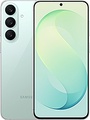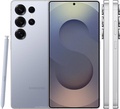

In the fiercely competitive smartphone market, camera specifications have become a primary battleground for flagship devices. However, a surprising new report suggests Samsung is taking a different approach for its upcoming Galaxy S26 series. According to leaks from South Korea, the company has made a significant strategic shift, opting to forgo planned camera hardware improvements on its standard models in a direct response to Apple's aggressive pricing strategy with the iPhone 17. This decision means the base Galaxy S26 and S26 Plus could enter their fourth consecutive year with essentially unchanged camera sensors, a move that highlights the intense pressure on pricing and value in the current market.
The Leaked Decision: Stagnation Over Innovation
According to a report from The Elec, a South Korean publication, Samsung had originally intended to upgrade the camera hardware on the Galaxy S26 and S26 Plus. This plan was part of a broader strategy that would have also involved a price increase for the new models. However, Apple's launch of the iPhone 17 forced a radical rethink. Apple maintained the same launch price as its predecessor, the iPhone 16, while doubling the base storage to 256GB. This move significantly increased the perceived value of the iPhone 17, putting immense pressure on competitors. In response, Samsung reportedly canceled the planned camera upgrades to avoid a price hike and remain competitive, choosing to keep costs down rather than push the envelope on imaging hardware.
Key Driver for Samsung's Decision: Apple launched the iPhone 17 at the same price as the iPhone 16 while doubling the base storage to 256GB, forcing Samsung to scrap camera upgrades to avoid a price increase on the S26.
The Expected Camera Specifications: A Familiar Story
If the reports are accurate, the Galaxy S26 and S26 Plus will ship with a camera system virtually identical to the one found on the Galaxy S25, S24, and S23. This lineage can be traced all the way back to the Galaxy S22, launched in 2022. The expected setup includes a 50-megapixel primary sensor, a 12-megapixel ultrawide sensor, and a 10-megapixel 3x telephoto lens. While the primary sensor is considered capable, the telephoto and ultrawide sensors are now viewed as outdated, especially when compared to the hardware in competing base models like the Google Pixel 10, which features a more modern 5x telephoto lens.
Reported Galaxy S26/S26+ Camera Specifications (Unchanged from S22-S25):
- Primary: 50MP, f/1.8, 1/1.56" sensor
- Ultrawide: 12MP, f/2.2, 1/2.55" sensor
- Telephoto: 10MP, f/2.4, 1/3.94" sensor, 3x optical zoom
The Competitive Landscape: Samsung Falls Behind
This decision places the standard Galaxy S models at a growing disadvantage against their direct rivals. Over the same four-year period that Samsung's hardware has remained static, Apple has transitioned the standard iPhone from twin 12-megapixel sensors on the iPhone 13 to a dual 48-megapixel system on the iPhone 17. Although Apple's setup lacks a dedicated telephoto lens, the leap in sensor resolution and technology is substantial. The gap is not just about megapixels; it's about the overall camera experience, where Samsung's non-Ultra models are increasingly seen as lagging in a critical area of smartphone performance.
Competitor Comparison (Base Models):
| Feature | Samsung Galaxy S26 (Reported) | Apple iPhone 17 | Google Pixel 10 |
|---|---|---|---|
| Primary Sensor | 50MP | 48MP | 50MP (est.) |
| Ultrawide Sensor | 12MP | 48MP | 12MP (est.) |
| Telephoto Sensor | 10MP (3x) | None | 48MP (5x, est.) |
| Base Storage | 128GB (est.) | 256GB | 128GB (est.) |
Potential for Software and Component Improvements
Despite the lack of new sensors, the Galaxy S26's camera performance may not be identical to its predecessor. The leak suggests Samsung could upgrade supporting components like actuators, which control autofocus and optical image stabilization. Improved actuators could lead to tangible benefits for users, such as faster focusing and better stability in low-light conditions. Furthermore, US variants of the S26 are expected to feature Qualcomm's new Snapdragon 8 Elite Gen 5 chipset, which includes a powerful 20-bit triple image signal processor (ISP). This hardware is designed to deliver vastly improved dynamic range, potentially allowing for better highlight and shadow detail in photos through computational photography, even with older sensors.
Market Implications and Consumer Choice
Samsung's apparent retreat from a camera hardware arms race in its standard flagships is a significant moment. It signals that in certain markets, particularly where Apple exerts strong pricing pressure, competing on pure specification may be secondary to competing on overall package value. For consumers, this creates a clear dilemma. Those who prioritize cutting-edge camera hardware may look to the Galaxy S26 Ultra, other Android manufacturers, or Apple's iPhone. For others, a consistent camera experience paired with potential software enhancements and a competitive price might be enough. Ultimately, this leak reveals a Samsung playing a cautious, reactive game in one of the smartphone's most visible and important categories.