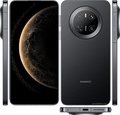
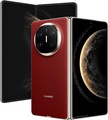
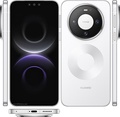
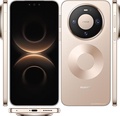
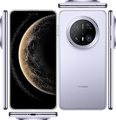
Huawei has officially taken the wraps off its latest flagship foldable smartphone, the Mate X7, for the global market. The announcement, made in Dubai on December 11, 2025, comes just two weeks after the device's debut in China, signaling a significantly accelerated global rollout strategy. Positioned as a direct competitor to Samsung's Galaxy Z Fold 7, the Mate X7 aims to differentiate itself with a focus on camera innovation, a larger battery, and robust build quality, albeit at a premium price point outside its home market.
A Refined Design with Enhanced Durability
The Huawei Mate X7 continues the book-style foldable form factor, featuring a 6.49-inch LTPO cover display and an 8-inch main folding screen. Both panels support a 120Hz adaptive refresh rate and high peak brightness, ensuring excellent visibility. While the device is slightly thicker and heavier than the Samsung Galaxy Z Fold 7, Huawei has maintained a comfortable grip through the use of curved edges and a premium finish. A key advancement in durability is the "3-layer Composite Ultra-Tough Structure" for the inner screen, which incorporates a non-Newtonian fluid layer that hardens on impact. The device boasts an IP58 and IP59 rating for dust and water resistance, offering superior dust protection compared to some rivals, though it falls short of the highest IP68 standard.
Key Specifications: Huawei Mate X7
- Displays: 6.49" cover (2444x1080), 8" foldable main (2416x2210); Both 1-120Hz LTPO, 1440Hz PWM dimming
- Chipset: Kirin 9030 Pro
- Rear Camera System:
- Main: 50MP RYYB sensor, f/1.5-f/4.0 10-stop variable aperture
- Telephoto: 50MP periscope, 3.5x optical zoom, OIS
- Ultra-wide: 40MP, 120° FoV
- Battery & Charging: 5,600mAh (Silicon-carbon anode), 66W wired, 50W wireless
- Durability: IP58/IP59 rated; "3-layer Composite Ultra-Tough Structure" inner screen
- Dimensions & Weight: 9.5mm (folded), 4.5mm (unfolded), 235g
- Global Price (16GB+512GB): EUR 2,099
Performance and Imaging: Kirin Power Meets Camera Prowess
At its core, the Mate X7 is powered by Huawei's in-house Kirin 9030 Pro chipset. It runs on EMUI 15.0 for international markets, which does not come with Google Mobile Services pre-installed, though users can reportedly sideload them. The camera system is a major highlight. It is headlined by a 50MP main sensor featuring a 10-stop variable physical aperture, ranging from f/1.5 to f/4.0. Huawei claims this technology allows for 86% more light intake, promising superior low-light performance and more natural-looking bokeh effects. This is complemented by a 50MP periscope telephoto lens with 3.5x optical zoom and a 40MP ultra-wide-angle camera, creating a versatile triple-camera setup that appears more capable on paper than the one found in the Galaxy Z Fold 7.
Battery Life and Global Pricing Strategy
Addressing a common concern with foldables, Huawei has equipped the Mate X7 with a substantial 5,600mAh silicon-carbon anode battery. This technology allows for higher energy density, enabling the large capacity to fit into the slim chassis. The company claims this provides a significant advantage over competitors, offering users the potential for all-day battery life. Support for 66W wired and 50W wireless charging ensures the device can be quickly topped up when needed. The global launch reveals a notable pricing disparity: the sole 16GB/512GB configuration is priced at EUR 2,099 (approximately USD 2,260 or CNY 17,420), which is over CNY 2,400 more expensive than the equivalent model in China.
Comparative Context vs. Key Rival The Huawei Mate X7 positions itself against the Samsung Galaxy Z Fold 7 with several claimed advantages and trade-offs:
- Advantages: Larger 5,600mAh battery (vs. ~4,400mAh typical), more advanced variable aperture main camera, superior IP58/59 dust resistance (vs. IP48).
- Trade-offs: Heavier (235g vs. ~215g), lacks native Google Mobile Services, global price is significantly higher than Chinese MSRP.
- Neutral: Both feature high-refresh-rate inner and cover displays, premium build, and similar book-style foldable form factors.
Conclusion: A Potent Challenger with Market Hurdles
The Huawei Mate X7 emerges as a technically impressive foldable that makes clear strides in battery capacity and camera hardware. Its rapid global launch demonstrates Huawei's confidence and ambition in the premium smartphone segment. However, its success outside China will be tested by its premium price tag and the ongoing lack of native Google services, which remains a significant barrier for many international users. For tech enthusiasts who prioritize cutting-edge camera technology and battery life in a foldable form factor and are less reliant on the Google ecosystem, the Mate X7 presents a compelling, if expensive, alternative to the established market leaders.