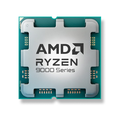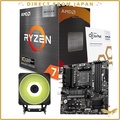

AMD has officially pulled back the curtain on its new flagship gaming CPU, the Ryzen 7 9850X3D, confirming its existence and a Q1 2026 launch window. This announcement, made on January 6, 2026, represents a strategic move by AMD to solidify its dominance in the high-performance gaming CPU market not with a radical new architecture, but by offering a premium, higher-binned version of its already formidable 3D V-Cache technology. The chip is positioned as the fastest gaming processor available, aiming to extract every last drop of performance for enthusiasts unwilling to compromise.
The Specifications: Refinement Over Revolution
At its core, the Ryzen 7 9850X3D is an exercise in refinement. It retains the foundational specifications of its predecessor, the 9800X3D: an 8-core, 16-thread design based on the Zen 5 architecture, paired with 96 MB of total L3 cache (32 MB native + 64 MB of 2nd Gen 3D V-Cache). The thermal design power (TDP) also remains locked at 120W, ensuring compatibility with the existing AM5 motherboard ecosystem. The singular, yet significant, upgrade is in clock speeds. AMD has certified this new SKU with a maximum boost clock of 5.6 GHz, a 400 MHz (or 8%) increase over the 9800X3D's 5.2 GHz ceiling. This makes it the highest-clocked V-Cache CCD AMD has ever produced, a title earned purely through superior silicon binning rather than any process or architectural change.
AMD Ryzen 7 9850X3D Key Specifications:
- Cores/Threads: 8 / 16
- Architecture: Zen 5 with 2nd Gen 3D V-Cache
- Max Boost Clock: 5.6 GHz (+400 MHz vs. 9800X3D)
- Total L3 Cache: 96 MB (32 MB + 64 MB V-Cache)
- TDP: 120W
- Platform: AM5 (DDR5 EXPO support)
- Launch: Q1 2026
- MSRP: To be announced
Performance Claims: Solidifying the Gaming Throne
AMD's performance narrative is twofold: it highlights the generational step up from its own previous champion and reinforces its substantial lead over Intel's competing flagship. Compared to the Ryzen 7 9800X3D, AMD claims gaming performance uplifts of up to 7% in the best-case scenarios, with a more realistic average expected to be in the low single-digit percentage range, around 2-3%. This aligns perfectly with the clock speed increase, indicating that the performance gain is almost entirely frequency-driven. The more dramatic comparisons are drawn against Intel's Core Ultra 9 285K. Here, AMD asserts an average gaming performance lead of 27%, with peaks as high as 60% in certain titles. These figures suggest the 9850X3D is less about a massive leap forward and more about cementing an already commanding position at the top of the gaming benchmarks.
Performance Comparison (AMD Claims):
| Comparison | Average Uplift | Maximum Uplift | Notes |
|---|---|---|---|
| vs. Ryzen 7 9800X3D (Gaming) | ~2-3% | Up to 7% | Gain is frequency-dependent. |
| vs. Intel Core Ultra 9 285K (Gaming) | 27% | Up to 60% | Extends an already significant lead. |
| vs. Ryzen 7 9800X3D (Productivity) | ~5% (avg. across select apps) | N/A | Showcased in single-threaded workloads. |
Market Strategy and the "KS" Playbook
The launch of the 9850X3D is a clear strategic play reminiscent of Intel's "KS" series of processors. With the gaming performance crown securely in hand, AMD is now targeting the segment of the market that demands the absolute best, regardless of incremental gains. By introducing a higher-binned, slightly faster variant, AMD creates a new top-tier SKU that can command a price premium from enthusiasts and system integrators building halo products. The company has confirmed that the 9850X3D will coexist with the 9800X3D, rather than replace it, creating a clearer performance and price stratification within its own lineup. This allows buyers to choose between exceptional value (the 9800X3D) and the uncontested peak (the 9850X3D).
Pricing, Availability, and the Value Proposition
As of the announcement, AMD has not disclosed the official pricing for the Ryzen 7 9850X3D. This leaves a critical question mark over its value proposition. The existing Ryzen 7 9800X3D carries a USD 479 MSRP. If AMD follows a modest pricing strategy, a small increase to around USD 500 could be justifiable for the 2-3% average performance gain. However, if it mirrors the more aggressive premiums of Intel's KS models (which historically saw 17-25% price hikes), the cost could balloon to USD 560-600. At that level, the value diminishes sharply for all but the most uncompromising buyers. The chip is slated for release in Q1 2026 through DIY channels and pre-built systems from OEM partners, with some vendors expected to showcase it in systems at the upcoming CES trade show.
Conclusion: A Calculated Consolidation of Power
The Ryzen 7 9850X3D is not a revolution; it is a consolidation. It signals that AMD's 3D V-Cache technology, combined with the Zen 5 architecture, has reached a level of maturity where the primary differentiator is the quality of the silicon itself. For gamers who already own a Ryzen 7 9800X3D, there is little reason to upgrade. For those building a new, no-expense-spared system in early 2026, it will represent the pinnacle of gaming CPU performance. Ultimately, its success will hinge on the final price. If priced judiciously, it offers a straightforward path to the best possible gaming performance. If priced too aggressively, it may remain a halo product for a select few, while the 9800X3D continues to be the champion of price-to-performance.