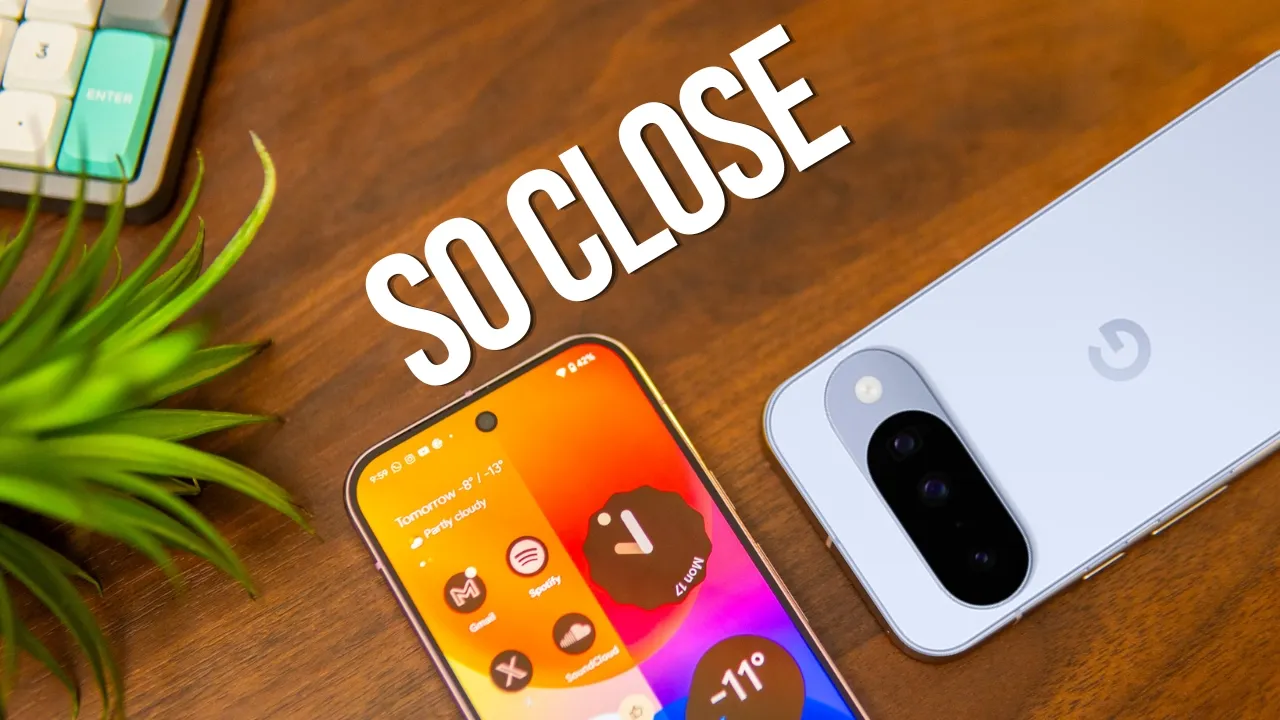
As 2025 draws to a close, Google's Pixel 10 series is receiving significant enhancements that address two critical areas for modern smartphone users: raw performance and cross-platform connectivity. While the device launched with capable hardware, early adopters noted its GPU performance lagged behind some rivals. Simultaneously, the perennial challenge of sharing files between Android and iOS devices has persisted. Recent software updates are now tackling both fronts head-on, delivering a noticeable performance uplift through pure software optimization and, in a landmark move, enabling seamless file sharing with iPhones. This dual focus on refining the user experience and breaking down ecosystem barriers marks a pivotal moment for the Pixel lineup.
A Quiet but Significant Performance Uplift
Google's latest quarterly Android update, Android 16 QPR2, has delivered a substantial and unexpected performance boost to the Pixel 10. While the company has not heavily marketed this improvement, the underlying optimizations have yielded tangible results in benchmark testing and, more importantly, in everyday use. Reports indicate that PCMark Work 3.0 scores, which simulate real-world productivity tasks, increased by nearly 20% following the update. This suggests Google's engineers have made significant strides in task scheduling and resource management at the software level. The improvement is particularly notable for a device that faced early criticism for its GPU performance compared to Snapdragon-powered competitors. This software-driven enhancement demonstrates Google's commitment to refining the Pixel experience post-launch, allowing the hardware to perform closer to its full potential.
Pixel 10 Performance Update (Android 16 QPR2):
- PCMark Work 3.0 Score Increase: ~20%
- Focus: Software optimization for improved task scheduling and GPU performance.
- Impact: Addresses early criticism of GPU performance lag behind rivals.
Breaking Down Walls: Pixel 10 Now Works with iPhone AirDrop
In a major step towards ecosystem interoperability, Google has reverse-engineered support for Apple's AirDrop protocol, integrating it into the Quick Share feature on the Pixel 10 series. This update, which began rolling out in November 2025, effectively allows Pixel 10 owners to send and receive files directly with iPhones without relying on third-party apps or cloud services. The functionality requires both devices to have their visibility set to "Everyone" for nearby devices, as the "Contacts-only" mode is not yet supported. To use the feature, Pixel 10 users must ensure the "Quick Share Extension" is updated via the Google Play Store. Once configured, an iPhone will appear in the Quick Share menu on the Pixel, and vice-versa, enabling a frictionless transfer process that was previously a significant pain point for users entrenched in different mobile ecosystems.
Pixel 10 to iPhone File Sharing (via Quick Share/AirDrop):
- Requirement: Quick Share Extension update from Play Store.
- Visibility Setting: Both devices must be set to "Everyone" (10-minute timer).
- Current Limitation: "Contacts-only" mode not supported.
- Device Support: Currently exclusive to Pixel 10 series.
Pixel 10a Specs Hint at a Familiar Formula
Looking ahead, details about the budget-focused Pixel 10a have surfaced through a Verizon certification. The listed specifications suggest Google may be taking a conservative approach with its next affordable model. The certification points to a 6.3-inch 120Hz AMOLED display, a 48-megapixel main camera, a 13-megapixel ultrawide lens, and a 13-megapixel selfie camera—specifications identical to the current Pixel 9a. It also mentions a 5,100 mAh battery, again matching its predecessor. This has led to speculation that the certification may contain placeholder information. If accurate, this strategy would contrast with the aggressive pricing pressures seen elsewhere in the market, such as Apple's reported decision to equip the base iPhone 17 with a 120Hz ProMotion display and 256GB of storage while maintaining its USD 799 starting price, a move that reportedly influenced Samsung's plans for the Galaxy S26.
Gboard Gets a Visual Refresh with Material You
Google is also refreshing the visual experience on Android with a redesign of Gboard's emoji interface. The new "Material 3 Expressive" design is slowly rolling out, featuring tweaked colors and a redesigned tab bar for easier emoji navigation. This update, however, is currently exclusive to devices running Android 16, meaning users on Android 15 will have to wait to access the new look. The gradual rollout is typical of Google's feature deployments and underscores the company's ongoing effort to modernize the core user interface elements across its ecosystem, ensuring a cohesive and updated aesthetic.
The Competitive Landscape and Broader Ecosystem Shifts
The updates to the Pixel 10 arrive amidst a dynamic competitive landscape. Samsung's upcoming Galaxy S26 Ultra, as confirmed by FCC documents, is set to use a Qualcomm Snapdragon 8 Elite Gen 5 chipset across all global variants, potentially an overclocked "For Galaxy" edition. Meanwhile, reports suggest the standard Galaxy S26 may reuse the previous year's camera hardware, a decision potentially linked to the need to compete on price. In other ecosystem news, Fortnite has quietly returned to the Google Play Store in time for its Season 7 launch, ending a long-standing absence stemming from legal disputes between Epic Games and Google. This normalizes access for Android users and signals a cooling of tensions between major platform holders and developers.
Conclusion: Refinement and Openness Define Pixel's Path Forward
The latest developments surrounding the Google Pixel 10 illustrate a clear two-pronged strategy. First, a deep commitment to software optimization can extract meaningful performance gains long after a device's hardware has left the factory. Second, and perhaps more impactful for the average user, is a push towards greater openness. By bridging the gap to Apple's AirDrop, Google is directly addressing a fundamental user frustration and challenging the notion of impenetrable ecosystem walls. While the Pixel 10a may represent iterative hardware, the software and connectivity advancements for the flagship models show a company focused on refining the experience and building a more connected, user-friendly digital environment.