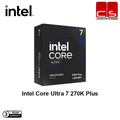
As Intel prepares its next wave of desktop processors, details of a refreshed model, the Core Ultra 7 270K Plus, have surfaced in a benchmark database. This leak provides an early look at the performance and specifications of what is expected to be a minor update to the current Arrow Lake lineup, offering a glimpse into Intel's strategy for the coming months.
A First Look at the Core Ultra 7 270K Plus
The Intel Core Ultra 7 270K Plus has been spotted in the Geekbench 6 database, revealing key specifications and initial performance figures. The chip is positioned as the successor to the existing Core Ultra 7 265K, part of Intel's planned "Arrow Lake Refresh" family. The listing confirms the processor was tested on a Gigabyte Z890 Eagle WIFI7 motherboard paired with 64 GB of DDR5 memory running at a conservative 4800 MT/s. This setup yielded a single-core score of 3,236 points and a multi-core score of 21,475 points, providing a baseline for its capabilities.
Geekbench 6 Performance Comparison
- Core Ultra 7 270K Plus (New Leak): 3,236 (Single-Core) / 21,475 (Multi-Core)
- Core Ultra 7 265K (Approx. Average): ~3,067 (Single-Core) / ~20,654 (Multi-Core)
- Performance Uplift: ~5.5% (Single-Core) / ~4.0% (Multi-Core)
- Notable Competitor (AMD Ryzen 9 9950X3D): 3,398 (Single-Core) / 22,096 (Multi-Core)
Specifications and Architectural Tweaks
The primary upgrade in the Core Ultra 7 270K Plus lies in its core configuration and cache. It moves from a 20-core (8 P-cores + 12 E-cores) design to a 24-core layout, adding four more E-cores for a total of 16. This brings it in line with the core count of the flagship Core Ultra 9 285K. The chip also sees an increase in L3 cache, from 30 MB to 36 MB. While its maximum turbo frequency remains at 5.5 GHz, matching the 265K, the base clocks and memory support have received attention, with official support for faster DDR5-7200 MT/s memory.
Key Specifications: Core Ultra 7 270K Plus vs. 265K
| Feature | Core Ultra 7 270K Plus | Core Ultra 7 265K |
|---|---|---|
| Cores (P+E) | 24 (8 + 16) | 20 (8 + 12) |
| L3 Cache | 36 MB | 30 MB |
| Max Turbo Clock | 5.5 GHz | 5.4 GHz |
| Memory Support | DDR5-7200 | DDR5-6400 |
| Tested Memory | 64 GB @ 4800 MT/s | N/A |
Performance Analysis and Competitive Context
The leaked Geekbench scores indicate a performance uplift, but it is a measured one. Compared to the average scores of the Core Ultra 7 265K, the 270K Plus shows an approximate 5% lead in both single and multi-core workloads. This places its multi-core performance notably close to the more expensive Core Ultra 9 285K. However, when viewed against the current competitive landscape from AMD, such as the Ryzen 9 9950X3D, the Intel chip's results are competitive but do not represent a category-leading shift. The performance delta is consistent with a refined "Plus" model rather than a generational leap.
Market Positioning and Expected Value
Pricing will be critical for the Core Ultra 7 270K Plus's success. Its predecessor, the 265K, launched with a USD 384 SEP but has seen significant market price adjustments, sometimes dropping near USD 200. If Intel launches the 270K Plus at a similar original MSRP, the modest performance gain may not justify the cost for most buyers. Industry observers suggest a launch price closer to USD 300 would be necessary to offer compelling value, especially as a drop-in upgrade for existing LGA 1851 socket owners. The chip is expected to be formally introduced at CES 2026 in the United States.
Conclusion: A Strategic Refresh
The leaked benchmarks for the Intel Core Ultra 7 270K Plus paint a picture of a competent, incremental update. The added cores, larger cache, and support for faster memory deliver tangible, if not revolutionary, improvements. For users on older platforms or those seeking a straightforward upgrade within the LGA 1851 ecosystem, it will be a viable option, provided its price is right. For the broader market, it represents Intel's effort to maintain competitiveness with refreshed products while the development of its next major architecture, Nova Lake, continues in the background.